



Overview
AI Confidence Is Outpacing Security Proof
AI adoption is accelerating across hybrid cloud, but confidence is rising faster than proof. New research from 1,000+ global security and IT leaders, including 300 CISOs and nearly 150 financial services leaders, reveals a widening gap between the perceived AI security maturity and the ability to verify risk.
In the past year, 65 percent of organizations suffered at least one breach, representing an 18 percent year-over-year increase, and 83 percent of those report AI involvement in these incidents as external attacks and internal threats increase.
Breaches are rising, AI is involved in most incidents, and fragmented visibility continues to slow response. The clearest path forward is better visibility into data in motion.
How do you compare?
Name the top AI security threat Security and IT leaders face.
External AI attacks ranked highest at 41 percent, followed by attacks on AI/LLM systems at 33 percent.
2026 SURVEY FINDINGS
Confidence Without Proof
Insights from 1,000+ global leaders reveal where confidence in AI security begins to break down.
The CISO Perspective
Security Pressure Meets Operational Reality
More than 300 CISOs shared how AI risk, limited visibility, and board misalignment are reshaping security priorities and accountability.

CISOs and Boards see risk differently
Only 25 percent of CISOs see incidents resolve within 72 hours.

Cyber risk is personal
Following an incident, 1 in 4 CISOs fear job loss.

CISOs want evidence, not assumptions
Accurate network telemetry is their top priority.

AI as a force multiplier
Nearly half plan to use AI to scale teams.

New Financial Services Industry Insights
With 98 percent of breached financial services organizations reporting material impact, leaders must adapt to AI-driven threats and reduce risk.

"AI is forcing financial institutions to accelerate innovation and risk management at the same time. The opportunity is significant, but so is the complexity. Financial institutions need visibility into how data, applications, and AI systems interact across hybrid cloud environments so they can identify exposure early and respond with confidence."
"Fragmented visibility isn't a technical inconvenience; it's a direct business liability that opens the door to breaches, compliance failures, and reputational damage. Until organizations have visibility into all data in motion, they are not managing risk, they are accepting it. In today's threat environments, that's a gamble organizations can no longer afford."
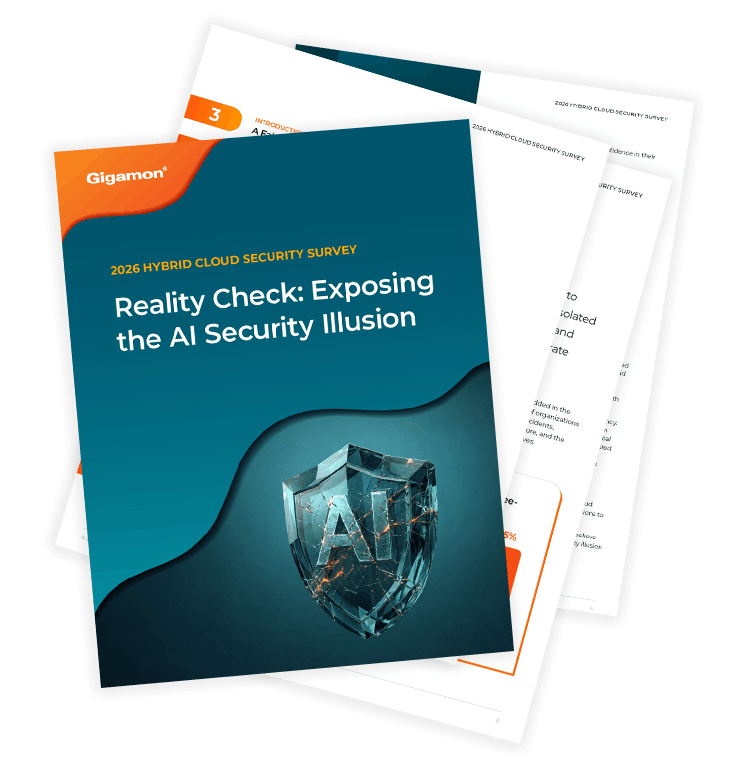
Download the 2026 Hybrid Cloud
Security Survey
Get the Report
By submitting this form, you agree to our Terms & Agreement. View our Privacy Statement and Email Preferences.
Resources
 BLOG
BLOG
When AI Confidence Outpaces Security Proof
 EXECUTIVE SUMMARY
CISO Empowerment in the Age of AI Risk
 RESEARCH REPORT
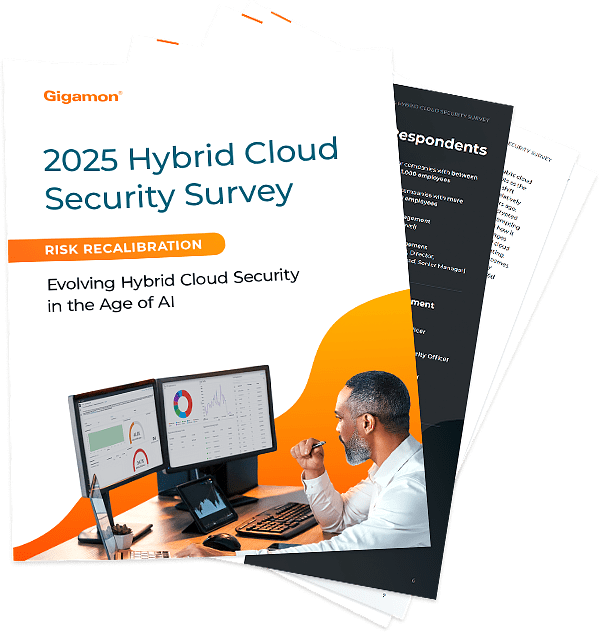
2026 Hybrid Cloud Security Survey
Frequently Asked Questions
The top cybersecurity trends in 2026 include rising breach rates, increased AI-driven risk, and gaps in governance as organizations struggle to keep pace with AI adoption. Sixty-five percent of organizations experienced a breach, and one in three faced multiple incidents. These trends highlight a growing gap between perceived security maturity and the ability to verify risk across hybrid cloud environments. As a result, security leaders are prioritizing visibility into data in motion, faster investigation, and stronger control over AI usage. Gigamon supports this shift by delivering network-derived telemetry across the hybrid cloud, helping teams to validate activity and make more informed and confident security decisions.
The impact of AI on cybersecurity includes increased attack sophistication, expanded internal risk, and greater operational complexity for security teams. Eight in 10 incidents now involve AI including external attacks, internal leaks and unsanctioned use of AI tools. While organizations are adopting AI-powered defenses, these tools rely on accurate and complete data to be effective. Without complete visibility into AI activities and data in motion, teams struggle to trust outcomes and respond quickly. Gigamon provides real-time visibility into AI-related network activity, enabling more accurate detection and faster response.
The best cybersecurity strategies focus on improving visibility, strengthening governance, and enabling faster, evidence-based response. Organizations are prioritizing visibility across all data in motion, reducing tool sprawl, and improving signal quality to accelerate detection and investigation. These strategies address the growing gap between perceived control and verified security outcomes. Accurate real-time insight into network activity and AI workloads is critical to making informed decisions. Gigamon enables these strategies by enriching security tools with network-derived telemetry, helping teams detect threats earlier and respond with confidence.
The AI security illusion is the gap between perceived AI security and the ability to prove it across hybrid cloud environments. In the survey, 83 percent of organizations reported AI involvement in security incidents, yet fewer than half can identify the root cause, and 17 percent cannot confidently determine AI involvement at all.
This gap creates a false sense of control, where organizations believe their AI security posture is stronger than it actually is. Without clear visibility into how data moves and how systems interact, risk remains hidden. Gigamon helps close this gap by delivering visibility into data in motion through network-derived telemetry, enabling teams to validate activity and move from assumption to evidence.
Visibility is critical for AI security because organizations cannot secure what they cannot see across hybrid cloud environments. Eighty-three percent of organizations report AI involvement in incidents, while security leaders rank comprehensive visibility into all data in motion as the most impactful strategy for success.
AI systems introduce dynamic interactions, increased traffic, and new attack paths that are difficult to monitor without clear insight. When visibility is fragmented, teams struggle to detect threats, investigate incidents, and enforce governance. Gigamon provides visibility into data in motion across hybrid cloud, helping teams detect threats earlier and investigate with greater accuracy.
Deep observability improves AI security by providing evidence-based visibility into data in motion, system interactions, and risk across hybrid cloud environments. Security leaders rank comprehensive visibility into all data in motion as the most impactful strategy for improving security outcomes.
At the same time, 93 percent of organizations have invested in new detection and visibility tools, yet 41 percent say it now takes longer to investigate breaches as AI increases traffic volumes. Traditional monitoring often misses critical context within encrypted, East–West, and high-volume traffic.
The Gigamon Deep Observability Pipeline enhances AI security by delivering network-derived telemetry to existing tools, enabling earlier threat detection, faster investigation, and more accurate, evidence-based decisions.
Organizations are reconsidering public cloud for AI workloads because it is widely perceived as the highest-risk environment for sensitive data. Seventy-eight percent of organizations view public cloud as the riskiest environment, and 79 percent are considering workload repatriation.
At the same time, this reveals a contradiction in how AI risk is managed. While public cloud is seen as high risk, AI workloads are often centralized in data lake environments that rely on the same underlying infrastructure.
This disconnect highlights a deeper issue: limited visibility into how data moves across hybrid cloud environments, applications, and AI systems. Without that visibility, organizations cannot effectively monitor activity or control risk. Gigamon provides visibility into data in motion across hybrid cloud, helping organizations validate activity and maintain control regardless of where workloads run.
Encrypted traffic visibility is important because critical security signals are often hidden within encrypted data flows. Eighty-nine percent of CISOs say improved visibility into encrypted traffic would reduce cyber insurance premiums, and 85 percent say application metadata is essential for securing encrypted traffic.
As AI adoption increases, more data interactions and potential threats move through encrypted channels, creating significant blind spots. Without visibility, organizations cannot reliably detect threats or investigate incidents. Gigamon enables visibility into encrypted traffic and delivers the metadata needed to strengthen detection and response.
CISOs struggle to prove security effectiveness to boards because they must demonstrate outcomes without complete visibility or shared understanding of risk. Nearly half of non-security C-suite leaders believe incidents are resolved within 72 hours, yet only 27 percent of CISOs agree. In addition, more than one in four CISOs are concerned about losing their job after a cyber incident, and 67 percent cite lack of board-level understanding as a major barrier.
This creates a proof gap, where CISOs are expected to explain risk and performance without sufficient evidence. Accurate, real-time visibility into network activity is critical to closing that gap. Gigamon delivers network-derived telemetry that, when combined with existing MELT data, enables deep observability and supports clearer reporting, faster investigation, and more defensible security decisions.
Financial services organizations are facing increased threats from “harvest now, decrypt later” attacks, AI-engineered social engineering attacks such as phishing and smishing, and attacks targeting AI and LLM deployments. Leaders in this industry cite lack of visibility across hybrid cloud infrastructure as a top challenge, with 94 percent investing in new security technologies to improve detection and visibility.
SURVEY ARCHIVE
Explore Past Hybrid Cloud Security Survey Reports