



Acquire Complete Network Visibility That is Key to Zero Trust
The Gigamon Deep Observability Pipeline provides visibility into all network traffic—a level of visibility that is foundational to Zero Trust success. As John Kindervag, sometimes called the Father of Zero Trust, observed: “Gaining complete visibility into the network is like lighting up the whole street. When it comes to implementing Zero Trust, this is the best place to start.”

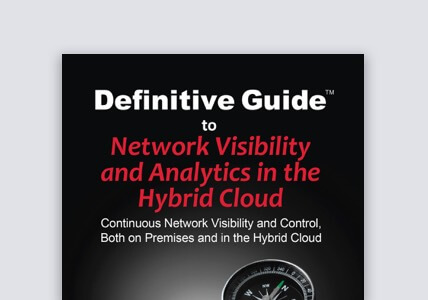
ANALYST REPORT
John Kindervag believes you can't protect the invisible.
How Gigamon Can Help
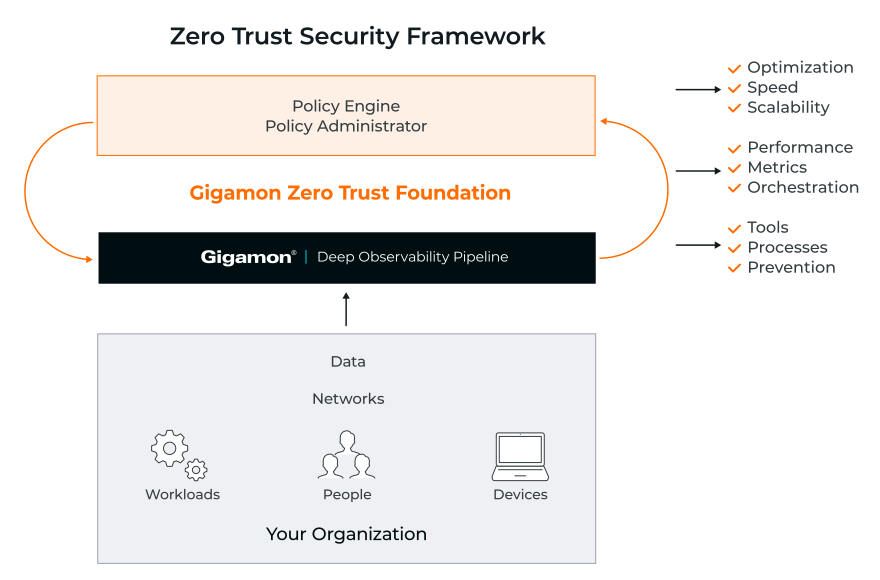
Gigamon applies native access techniques to acquire network traffic before transforming, optimizing, and distributing that traffic to the tools you are using to secure your hybrid cloud infrastructure and enforce your Zero Trust policies. Gigamon generates network-derived application metadata that can be used to continuously verify all network activity, in accordance with the “never trust, always verify” Zero Trust philosophy.
See All Your Traffic
Eliminate the biggest blind spots and detect vulnerabilities with Gigamon Precryption® technology, which provides plaintext visibility into all encrypted traffic to build a strong foundation for Zero Trust architecture.
Trust But Verify
Extend the value of cloud, security, and observability tools with metadata-based verification to deliver defense in depth and complete performance management across hybrid cloud infrastructure.
Mitigate Compliance Risks
Fulfill compliance and regulatory requirements by capturing and retaining network packet data to demonstrate compliance during audits and regulatory inspections.
“The Gigamon platform enables us to feed all the different tool sets we have acquired and offers us X-ray capability, not only in the physical world but also in the virtual world.”

“Gigamon [has] helped us move beyond playing whack-a-mole and chasing every vulnerability, toward a more strategic approach to cybersecurity. It gives us the data we need to build network resilience, reduce our attack surface, and make it harder for threat actors to impact our environment.”

“Enterprises don’t lack AI tools for network operations; they lack trusted data. High-fidelity network telemetry is becoming the foundation for effective AIOps and security, and platforms like Gigamon are emerging as the data layer that ensures AI systems operate on complete, reliable network intelligence.”
Resources
 WHITEPAPER
Making Zero Trust Architecture a Reality for The DoD
Learn what Intelligence Agencies consider a critical part of a Zero Trust architecture.
 RESEARCH REPORT
2026 Hybrid Cloud Security Survey
AI security confidence is rising faster than proof. See where it breaks down.
 WEBINAR
Increase Effectiveness and ROI
Getting the most from your investment in microsegmentation.
Frequently Asked Questions
Zero Trust is based on three core principles: never trust, always verify, and least-privilege access. These principles are implemented through several practical pillars.
- Identity verification: Every user and device must prove who they are before gaining access.
- Device security: All endpoints must meet your defined security standards.
- Network segmentation: Breaking your Zero Trust network into protected zones around critical assets.
- Data protection: Keeping information encrypted at rest and in transit.
- Application security: Applying secure practices for applications and continuously monitoring for threats.
- Continuous monitoring & analytics: Watch activity and behavior across users, devices, and traffic to reliably enforce policy and detect anomalies.
The Zero Trust security model offers several benefits, such as:
- Enhanced security: Nothing is automatically trusted; everything gets verified first.
- Reduced attack surface: Network segmentation and least-privilege access limit potential exposure.
- Improved compliance: Detailed records show who accessed what and when.
- Faster threat response: Complete visibility lets you detect and respond to threats quickly.
- Cost savings: Prevent expensive data breaches before they happen.
- Remote work support: The Zero Trust architecture protects access regardless of location, making it a good option for distributed workforces.
Building a Zero Trust architecture starts with getting complete visibility into your network. First, you need to understand what Zero Trust is and see where your security stands today. Start by:
- Mapping out all your assets, users, and how data moves through your systems.
- Define protect surfaces and access policies based on least-privilege principles.
- Strengthen identity controls using methods such as multi-factor authentication and adaptive access policies.
- Segment the network around critical resources to limit lateral movement.
- Implement continuous monitoring so network activity can be observed and analyzed in real time.
- Effective Zero Trust implementations depend on security tools that can inspect encrypted traffic and identify threats as they occur.
Deep observability is the foundation that makes Zero Trust security work. You can't verify and protect what you can't see. Deep observability gives you complete visibility into all network traffic, which is exactly what you need to follow the "never trust, always verify" rule.
It lets you see everything happening on your network, even encrypted traffic, so you can spot suspicious activity. This visibility works across hybrid cloud environments, keeping your security policies consistent no matter where your apps and data live.
Gigamon supports Zero Trust architecture through its Deep Observability Pipeline, which gives you complete visibility into all network traffic across your hybrid cloud setup. The platform captures network traffic, processes it, and sends it to your security tools.
Gigamon creates network metadata that helps you continuously verify all network activity, which is exactly what Zero Trust requires. The platform's Precryption technology lets you see inside encrypted traffic, eliminating blind spots that could hurt your Zero Trust implementation. This is important for hybrid cloud security, where old perimeter-based approaches don't work well.
Zero Trust architecture is well-suited for hybrid cloud environments where traditional security models struggle. Since hybrid clouds are spread across different locations, the Zero Trust network approach makes perfect sense because it doesn't matter where your resources are located.
With Zero Trust, you can use the same access controls and verification mechanisms whether your applications and data are on-premises, in public clouds, or in remote locations.
Have Questions?
We're here to help you find the right solution for your business.
By submitting this form, you agree to our Terms & Agreement. View our Privacy Statement.